

Contact us
401 W. Kennedy Blvd.
Tampa, FL 33606-13490
(813) 253-3333
From peer coaching to massage chairs, the University has expanded a wide network of wellness resources for students every year.
Experiencing mental health challenges does not mean a student isn’t capable of being successful in college, it means they are navigating a significant life transition as an emerging adult, said Addie Carothers '11, wellness director at UTampa.
With the fall semester well underway, mental health challenges are common for students — especially freshmen adjusting to the demands of college-level coursework, their first round of grades, and looming midterms. These new experiences can be exciting, but they can also bring real stress, and navigating that is something many students face.
National surveys and studies from the past five years say about one-third of college freshmen experience some kind of mental challenge in their first year of school. Among college students overall, that number climbs even higher: nearly 70% said they'd experienced a mental or behavioral health concern in the past year, according to a UnitedHealthcare report.
College life is a big transition and the semester’s halfway mark can be especially precarious as the novelty of a new place can be overshadowed by its realities.
As students adjust to new expectations, relationships and routines, it can be common to experience stress, loneliness or moments of feeling overwhelmed, said Addie Carothers '11, director of wellness at UTampa.
“Experiencing those challenges does not mean a student isn’t capable of being successful in college,” she said. “It means they are navigating a significant life transition as an emerging adult.
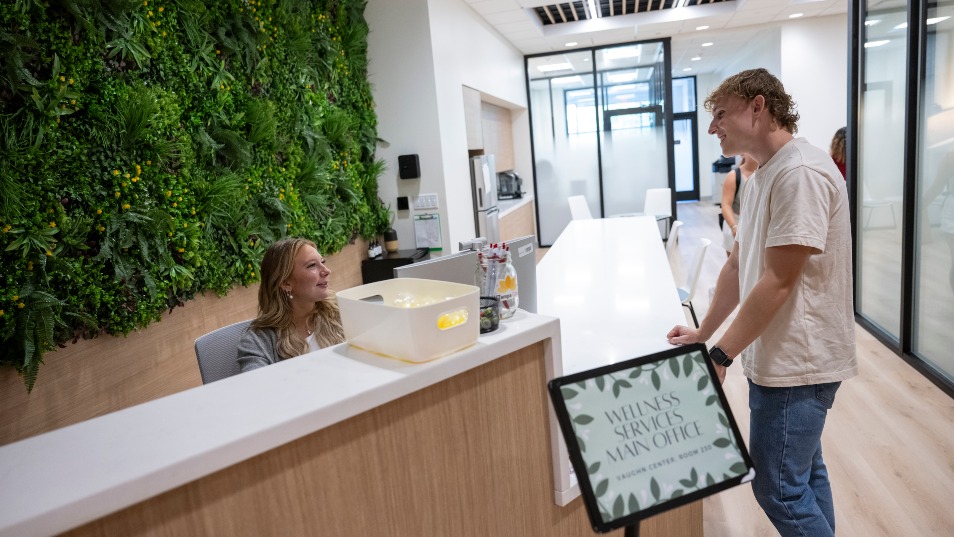
Wellness Services focuses on helping students prioritize their well-being, build resilience, develop meaningful connections and strengthen their sense of belonging before challenges arise. The University of Tampa offers dozens of student organizations, classes and events designed to help students build mental health skills and sustain their wellness throughout the year.
“Through Wellness Services and the UTampa Cares initiative, we want students to know they are not alone,” Carothers said. “We encourage students to give themselves time to adjust, stay connected and reach out for support when they need it.”
Here's a rundown of the University's wellness offerings, by the numbers from last academic year:
5 certified peer wellness coaches, who facilitated 183 one-on-one sessions
4 online courses about alcohol and other drugs, sexual assault and violence prevention that are required viewing for all new students
More than 20 “Live Well” student groups on campus focused on various aspects of wellness
7 certified peer nutrition coaches who facilitated 101 one-to-one sessions with students
223 wellness events sponsored by “Live Well” organizations, which consists of student wellness organizations and Certified Peer Educators
582 students who participated in workshops on cultivating and maintaining resilience
458 students used “destress kits” which include mindfulness tools and games to provide a mental break
10 student faith groups with 414 events and 13,164 total student attendees
1,472 massage chair check-ins with 93% of users reporting decreased stress
Resources if you or someone you know needs support:
Spartan Support Program — If you know someone on campus who may be experiencing mental health challenges or could use some support, you can anonymously refer them to Spartan Support through this form, and someone from the University will reach out.
The University of Tampa offers a 24/7 Student Support Line to address mental health concerns that can be reached at (833) 755-0484.
The University of Tampa Counseling Services, located in the Dickey Health and Wellness Center directly behind Austin Hall, provides counseling to all full-time undergraduate students and all international graduate students. Domestic graduate students without an active student health insurance policy will be assessed a fee. Referral to an off-campus counselor that takes student insurance can be made from the center. Counseling Services can be reached at (813) 257-4114.
The National Crisis Text Line is a texting service for emotional crisis support. To speak with a trained listener, text HELLO to 741741. It is free, available 24/7 and confidential.
More UTampa News


© 2024 The University of Tampa. All Rights Reserved.
Subscribe to News and UTampa Life

Contact us
401 W. Kennedy Blvd.
Tampa, FL 33606-13490
(813) 253-3333
© 2024 The University of Tampa. All Rights Reserved.
Subscribe to News and UTampa Life