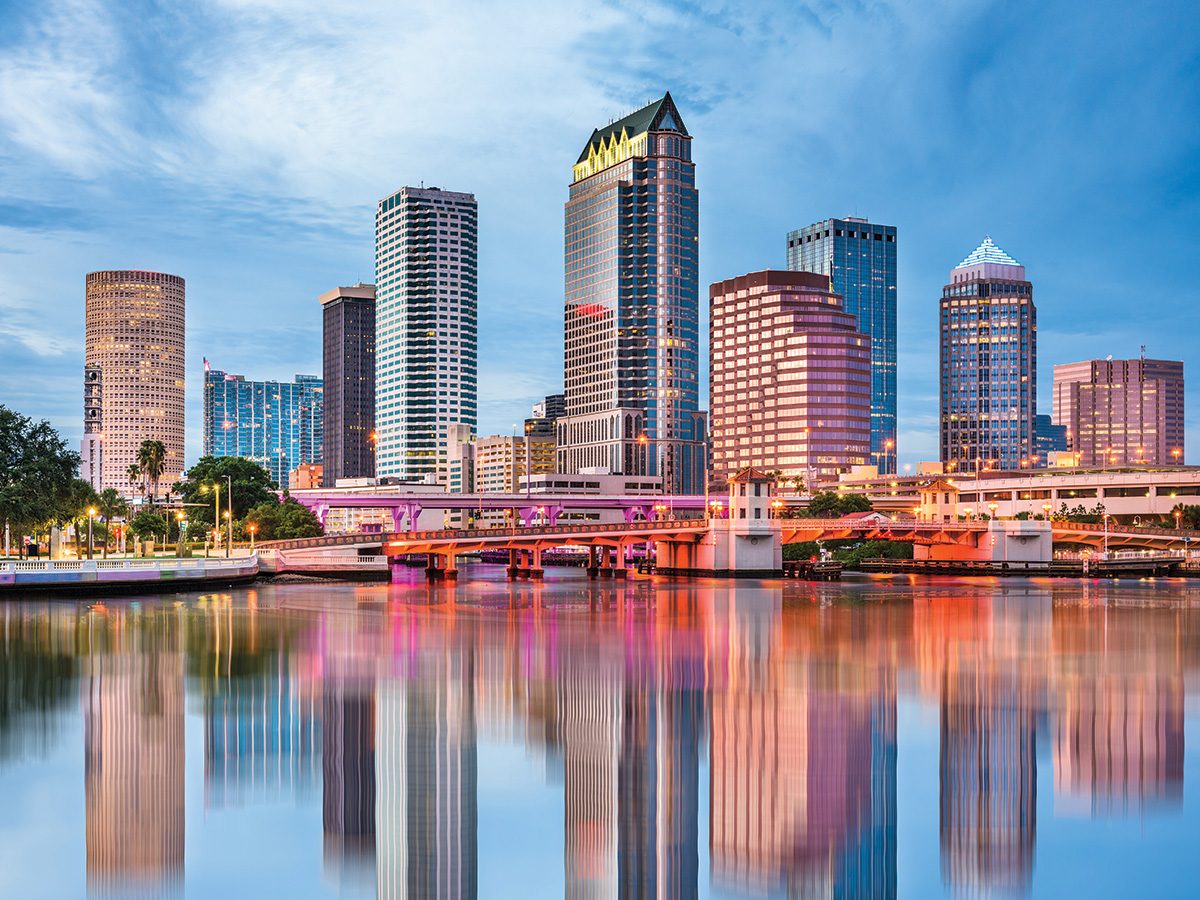
March 12-14, 2026, University of Tampa
- Keynote Speaker
- Invited Panels
- Conference Schedule
- About Colloquium
- Submit your Work
- Questions?
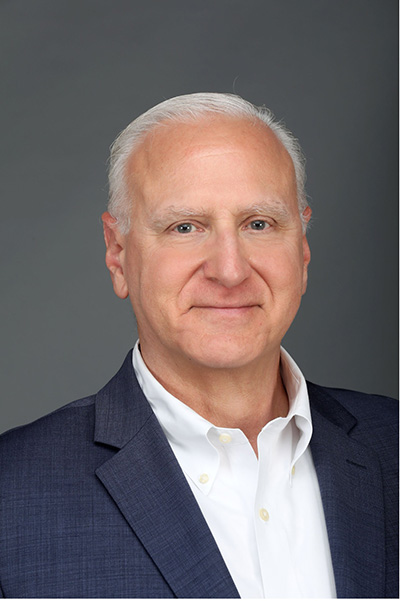 Mark Katches
Editor, Tampa Bay Times
Mark Katches has been vice president and editor of the Tampa Bay Times since August 2018. Before moving to Florida, he served as the top newsroom editor at The Oregonian/OregonLive in Portland, Oregon, and at the Center for Investigative Reporting in California, where he helped launch a start-up nonprofit investigative newsroom. He has built and overseen investigative reporting teams at the Milwaukee Journal Sentinel and the Orange County Register. Over the past 20 years, Katches has led newsrooms to five Pulitzer Prizes and six finalists. His newsroom at the Times won the Pulitzer Prize in back-to-back years in 2021 and 2022. He has taught journalism at Stanford University, the University of California, Berkeley; and the University of Southern California. He serves on the Florida Society of News Editors board and the Poynter Institute's National Advisory Board.
Panel 1: Trust Kits for Journalism Educators
Panelists: Joy Mayer, Trusting News and Patrick R. Johnson, Marquette University
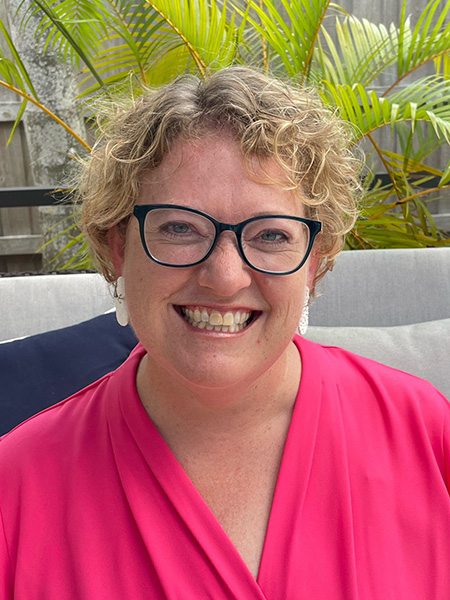 | Joy Mayer is the founder and executive director of Trusting News, a project that equips journalists to actively earn trust and helps journalists and the public understand each other. She and her team train newsrooms on strategies for demonstrating credibility and actively earning trust. She launched Trusting News in 2016 after a 20-year career in newsrooms and teaching. She spent 12 years at the Missouri School of Journalism, where she developed an audience engagement curriculum and a community outreach team in the newsroom of the Columbia Missourian. |
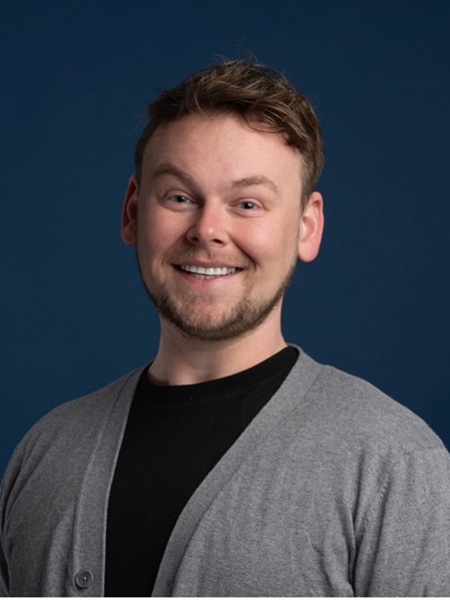 | Patrick R. Johnson (Ph.D., University of Iowa) is an assistant professor of journalism and media studies, whose scholarship explores the moment when thought turns into a story. He maps the news literacies and reflective journalism practices that guide reporting, attending to ethics, boundary work, process and trust to reimagine journalism’s obligations to the communities it serves; he also draws on LGBTQ+ issues, and questions of sex and sexuality more broadly, as vantage points for understanding equity and inclusion in journalism practice and media literacy. |
Panel 2: Hurricanes Reporting and Public Information Disaster
Saturday, March 14, 2026; 1-2:30 p.m.
Moderator: Mildred F. Perreault, Assistant Professor, University of South Florida
Mildred Perreault has researched local journalists, public relations practitioners, and citizen scientists as both stakeholders and disaster communicators. Her primary interest is in science communication and journalism and journalistic interpretations of science. She has also looked at identity as a key indicator of audience perception and interpretation. Perreault has been published in Mass Communication and Society, American Behavioral Scientist, Journalism Practice, Games and Culture, Disasters, Communication Studies, and Journalism Education. She is the co-editor of the forthcoming AEJMC Peter Lang Scholar Sourcing book, Crisis Communication Case Studies on COVID-19: Multidimensional perspectives and applications with Sarah Smith-Frigerio. After working as a journalist and public relations professional in Washington, DC, and South Florida, she sees the role of the local journalist during a natural disaster as one that can engage community response and build community resilience. Perreault is an assistant professor of public relations and mass communications at the Zimmerman School of Advertising and Mass Communications at the University of South Florida.
Panelists:
| Katja Miller is the Operations Section Chief for Hillsborough County Office of Emergency Management, with 11 years of experience in emergency management and civil service. She began as a firefighter/EMT in Arizona before returning to Tampa in 2016. Katja has worked with Pinellas County OEM, the Recover Tampa Bay Initiative and was promoted to her current role in 2022. She holds a master’s in Emergency and Crisis Management, a B.S. in Public Health, and an A.A.S. in Fire Science. Her major activations include multiple hurricanes, the COVID-19 response, and Super Bowl LV. She leads four emergency management branches during activations. |
| Max Chesnes is the environment reporter for the Tampa Bay Times. He reports on public lands, pollution, wildlife and intensifying hurricanes. Prior to working for the Times, Chesnes covered environmental issues for Treasure Coast Newspapers and the USA Today network, writing about Lake Okeechobee, the Indian River Lagoon and Florida’s wondrous Everglades. Chesnes is a 2023 journalism fellow at Columbia University’s Center on Global Energy Policy and a recipient of several environmental writing awards. He studied both journalism and sustainability at the University of Florida and is licensed to fly drones. |
| Stephanie Anderson (Ed.D., Murray State University) is an associate professor of instruction in the Zimmerman School of Advertising and Mass Communications. She oversees Z News, a newsbreak produced by students that airs on WEDQ (PBS) in Florida’s # 1 media market. Anderson spent 12 years teaching journalism and mass communications at Murray State University in Murray, Kentucky before moving to Tampa in 2022. She is a certified college media adviser by the College Media Association. She is heavily involved with the Broadcast Education Association and serves as the vice chair of the Student Media Advisor’s Division. In 2023, Z News (formerly Florida Focus) placed second in the Dr. Marjorie Yambor Signature Station of the Year competition at BEA. |
| Elizabeth A. Dunn, MPH, CPH, is a faculty member in the University of South Florida College of Public Health, where she teaches courses in disaster management, humanitarian relief and homeland security. Her professional practice encompasses volunteer management, mass care operations, needs assessments and advancing program planning through evidence-based approaches. Her research focuses on hurricane evacuation decision-making, the evaluation of disaster management systems, and the ways in which the built environment and social determinants shape outcomes for vulnerable populations. She also directs the USF Community Emergency Response Team (CERT) in partnership with the Hillsborough County Office of Emergency Management. She is currently pursuing a Doctor of Public Health (DrPH) in Public Health Leadership, with a concentration on humanitarian agri-food supply chain disruptions and strategies to strengthen community food system resilience. |
| Heather Koester, MBA, began in the United States Army Reserves, where she developed the discipline, adaptability and commitment to service that continue to shape her leadership today. Koester is the founder and CEO of Invigorate Nexus, a consulting firm she has led for over eleven years. The firm specializes in improving efficiencies, strengthening leadership, and building resilience across organizations and communities. She partners with nonprofits, businesses and government agencies to design practical systems, streamline operations, and create sustainable strategies for growth and impact. Her work currently spans a seven-county region in Southwest Florida, five of which are contracted through United Way Suncoast, where she serves as the Disaster Resilience Officer. In this role, she leads preparedness and resilience initiatives, working with cross-sector partners to strengthen networks and emergency systems. She has also been appointed to reenergize and lead the Manatee County Community Organizations Active in Disaster (COAD), fostering collaboration across sectors, reducing duplication, and ensuring communities are ready to respond and recover effectively. |
| Koester is also the author of The Energy Audit: A Six-Week Guide to Revitalize Your Life, a practical resource for reclaiming energy, sharpening focus and improving productivity. As a speaker, she is known for making complex challenges clear and actionable, blending strategy and resilience to equip leaders and teams for lasting success. |
A Brief History of the AEJMC Southeast Colloquium
The AEJMC Southeast Colloquium holds the distinction of being the oldest and most established regional gathering within AEJMC. First convened in 1976, the colloquium was created as an intimate, accessible space for scholars to share works-in-progress, test new ideas, and connect with colleagues outside of the larger national conference. What began as a small, discussion-focused meeting has since grown into a vibrant academic tradition.
Over the decades, the Southeast Colloquium has served as a launchpad for generations of communication scholars. Many early-career researchers presented their first academic papers here, gaining feedback that later shaped published journal articles and books. The colloquium’s spirit of mentorship and collaboration has long set it apart, fostering connections that continue well beyond the conference itself.
Milestones include the steady expansion of divisions and interest groups represented at the conference, reflecting the field’s evolving landscape. The colloquium has also been a site for important conversations about media law, ethics, journalism practices, public relations, advertising, and emerging areas of communication research. More recently, the event has welcomed undergraduate and graduate student research, carrying forward its legacy of nurturing the next generation of scholars.
AEJMC Southeast Colloquium 2024
The 49th AEJMC Southeast Colloquium was held March 7-9, 2024, at the University of Kentucky College of Communication and Information, 25 years after Kentucky first hosted the event. It brought together 168 registered faculty/professionals (116) and students (52) for research presentations, panels, and networking. Nine interest groups and divisions (Broadcast & Mobile Journalism, Community Journalism, History, Law & Policy, LGBTQ, Magazine Media, Newspaper & Online News, Scholastic Journalism, Visual Communication) held paper sessions and sponsored panels. The colloquium also featured open paper and Great Ideas for Teachers (GIFT) competitions. More than 126 full papers, research in progress abstracts and GIFTs were submitted, with 94 accepted (74.6%). Special panels and sessions included “Teaching with AI” and “Innovations in Visual Communication” pre-conference workshops, a photo walk around Lexington, a hands-on Drone Journalism session, and a keynote titled “How the Press Shaped the Tulsa Race Massacre and Its Legacy,” by journalist and author Victor Luckerson.
Last year, the University of North Carolina at Chapel Hill had the honor of hosting the 50th anniversary of the Southeast Colloquium—a celebration that brought together five decades of scholarship, mentorship, and community. That milestone gathering underscored just how far the colloquium has come since its beginnings in the 1970s, with participation now spanning hundreds of scholars across divisions and interest groups. This year, the University of Tampa proudly hosts the 51st annual colloquium, continuing the tradition of providing a dynamic forum where established and emerging voices in communication scholarship meet, exchange ideas, and shape the future of the field.
Nearly five decades on, the AEJMC Southeast Colloquium remains true to its roots—collegial, forward-looking, and committed to rigorous but constructive engagement. It is not just a conference, but a community: a place where ideas are tested, careers are launched, and the future of communication scholarship is shaped.
If you have any questions or suggestions, please contact Sohana Nasrin, snasrin@ut.edu.