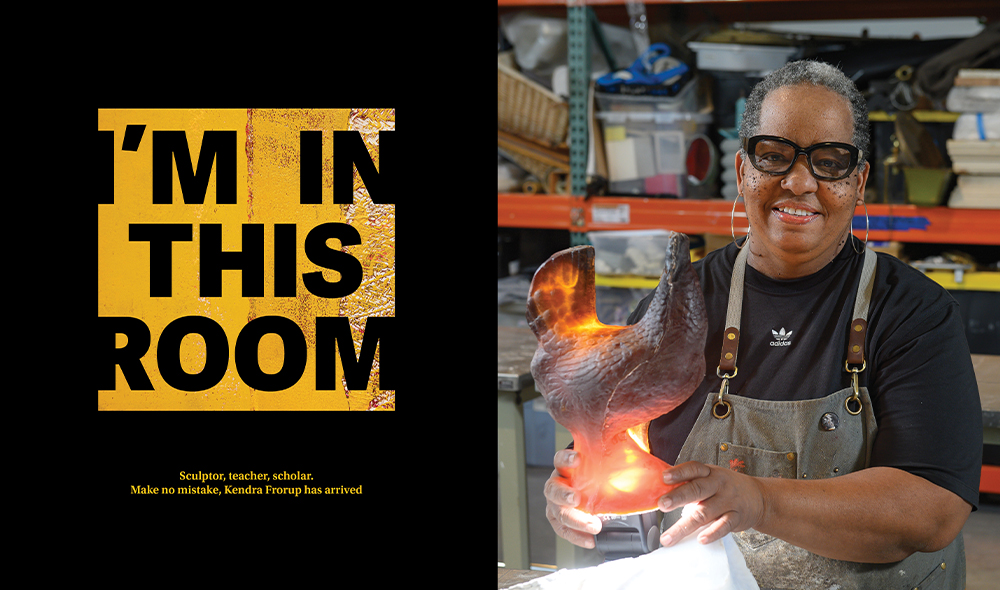
Written by Cathy Salustri '95 and Holly Neumann | Photo by Jessica Leigh | Illustrations by Michael Crampton | Published on June 8, 2026
'Florida-Splaining'
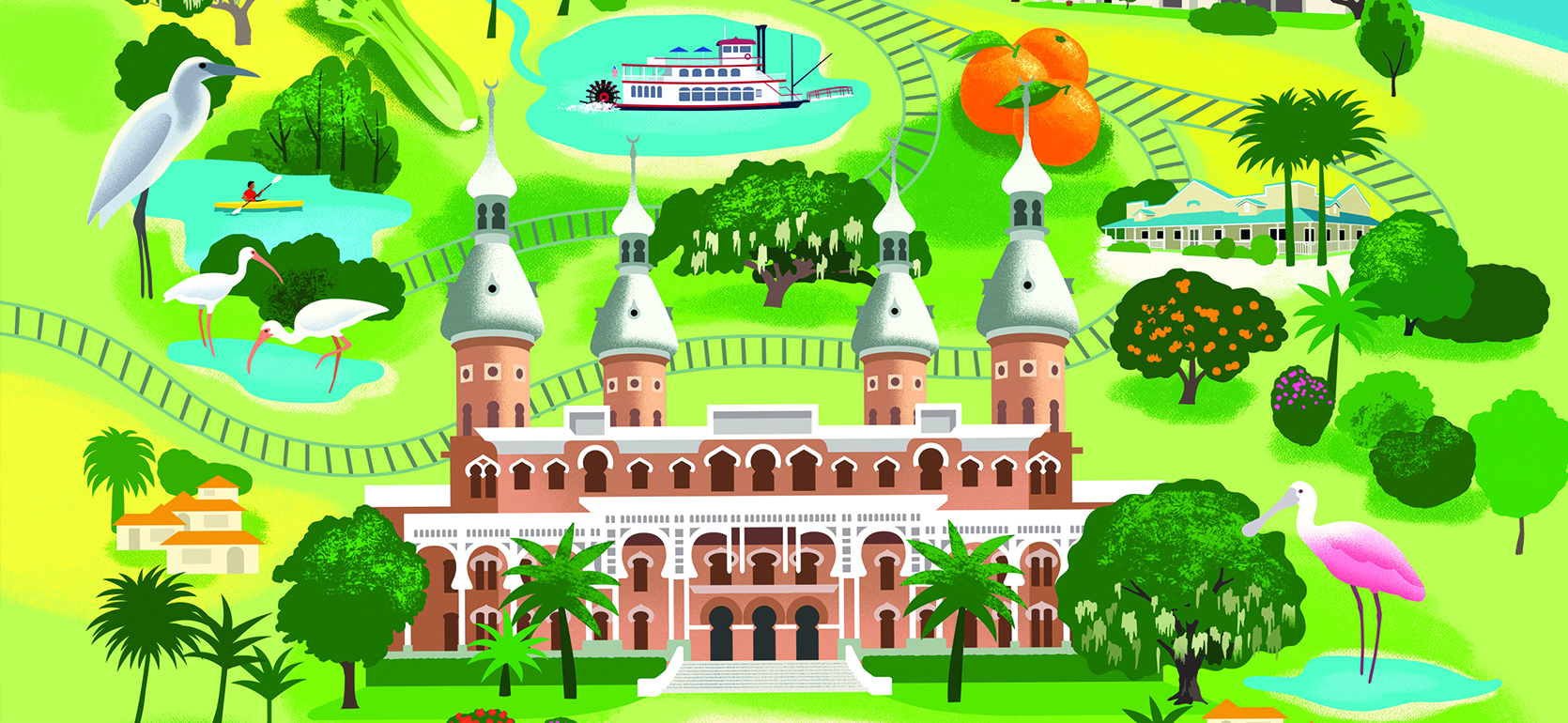
Every day, the UTampa community studies, teaches and learns in a beloved piece of our state's history: Plant Hall, the former Tampa Bay Hotel.
In this piece, we meet Florida writer Cathy Salustri '95, who guides us to explore some other grand spots that Henry Plant built.
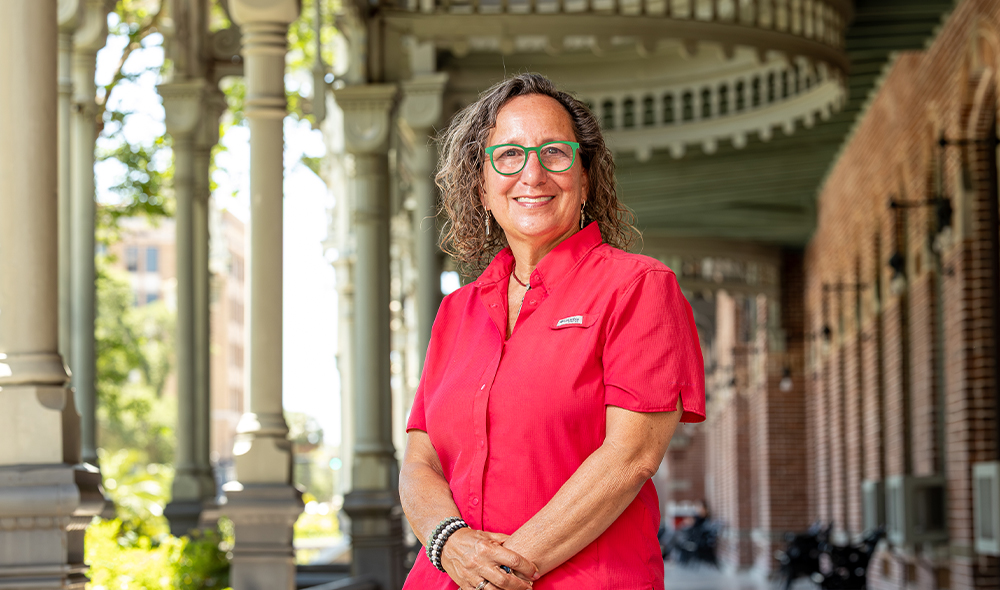
For writer Cathy Salustri ’95, the Sunshine State is her home — and her niche.
Cathy Salustri ’95 will tell you that she’s a “militant Floridian.”
Before anyone assumes what she means by that, it’s important to know that her main job is as a travel writer. She graduated from UTampa with a communication degree and later earned a master’s in Florida Studies from USF.
Today, she has authored several books that if they had arms would wrap the state in a knowing hug, pulling together its history, ecology, geology and geography, culture and more in stories that enlighten, entertain, criticize — and elicit and encourage respect.
She calls her style “Florida-splaining,” and to read along, it feels like taking a walk-and-talk with a smart and witty friend.
Sometimes that trek is a true adventure, a slog through the swamp, or a hands-and-knees crawl through a tight spot on the wildlife corridor, mere steps from snakes coiled along a path obscured by scratchy saw palms. Sometimes, it’s a nostalgic saunter tracing an old rail line, a trip through time and place with nods to progress and peril, development and decisions.
“I do have a tendency to go into situations that most people wouldn’t,” Salustri said recently. “A lot of what I know is by exploration. … You only hear the tales of the explorers who live to write about it.”
In 2017, the New York Times interviewed Salustri after her book, Backroads of Paradise: A Journey to Rediscover Old Florida, was published by University Press of Florida. The book traces routes documented by Works Progress Administration writers in the 1930s, when the government sought to boost the tourism economy by capturing potential travelers’ imaginations through guidebooks.
She wanted to tell people about the Florida beyond the theme parks, she told the Times then, and today she’s still doing it through all sorts of means and media. She owns The Gabber Newspaper, a weekly in Pinellas County; gives “Florida talks” at libraries, festivals and museum gatherings statewide on topics like roadside attractions and "bad-ass Florida women”; blogs about state parks, endemic and endangered species, food and the environment; and co-hosts the Florida Spectacular podcast, which shares its name with her newest book, 2024’s Florida Spectacular: Exceptional Places and Exceptional Lives, also published by University Press of Florida.
Salustri isn’t a Sunshine State native — she moved here from New York at 7 years old. But she never heard her parents say, “That’s not how we did things up North,” and they never restricted her reading, giving her wide exposure to thinkers and things growing up. Both these aspects of her upbringing shape her work today. She objects to Florida being a character in a meme and rejects “Florida man” jokes as “punching down.” Her observations often challenge contemporary notions and reveal untold or neglected stories, adding context to popular perceptions.
She was 30 when she gave writing an honest shot as a career, and at the beginning, it wasn’t glamorous, she said, nor was she qualified to write on all subjects assigned to her in the “shoppers” and content mills she worked for at first.
“If you see an article online written by me on how to build a sea wall, don’t follow the instructions,” she said.
But a Florida day trip story? Maybe one with a historical connection to the University of Tampa campus? There might be no one more qualified for that than her.
— Holly Neumann

LET'S GO: THE FLORIDA-SPLAINED EDITION
The South was beaten. Bruised. Angry. Certainly no place for a gentleman from Connecticut to make a name for himself in the 1880s. But Henry Plant was not to be deterred. He’d worked in the South, both before and during the Civil War. He fled before the end of the war, but less than 20 years after the Union defeated the Confederacy, he returned, this time to Florida, cobbling together an empire of recovered rail lines and new, bringing service across the state. In 1882, work began on his Florida railroad; not quite two years later, the first train pulled into Tampa. When it did, he’d yet to build the grand Tampa Bay Hotel — that would come in 1891, three years after his first Tampa Bay hotel, the Inn at Port Tampa.
Yes, you read that right. Plant really banked on Tampa being the next great thing (and he wasn’t wrong). Along the (rail)road to Tampa, Plant made some stops. Literally. He built or bought grand hotels at key places along his tracks. Florida in the 1880s, while stunning with its natural beauty, didn’t have as many people attracted to the peninsula — for good reason: Although John Gorrie had invented a crude form of air conditioning some 40 years prior, few places had it. This made summers a bit of a hurdle for folks, and places south of Gainesville had few residents, save for some coastal communities. That didn’t discourage Plant; he saw Florida as a giant blank canvas on which he could paint the future he saw for the state.
And what an artist he was. Plant’s railroad forever transformed our state. Some of our best-known cities are best known because of his vision. While some of them don’t look exactly the way Plant must have envisioned, each has its own vibe, worth exploring and discovering.
So grab your camera, and let’s take some road trips to see some of the towns our Henry built!

KISSIMMEE: FINDING OLD FLORIDA
Today, Kissimmee is thought of as a suburb of Walt Disney World, but to Plant, it was the perfect place for the railroad — and a hotel. Long before Orange Bird, oranges ruled the day in this part of the state, and citrus packers would send thousands of grapefruit, oranges and other citrus north along the railroad.
Today, Kissimmee has traded citrus for tourists, but there’s more than Disney-adjacent venues here. It’s not hard at all to explore the off-the-tourist-path parts of Kissimmee, which still look a lot like old Florida.
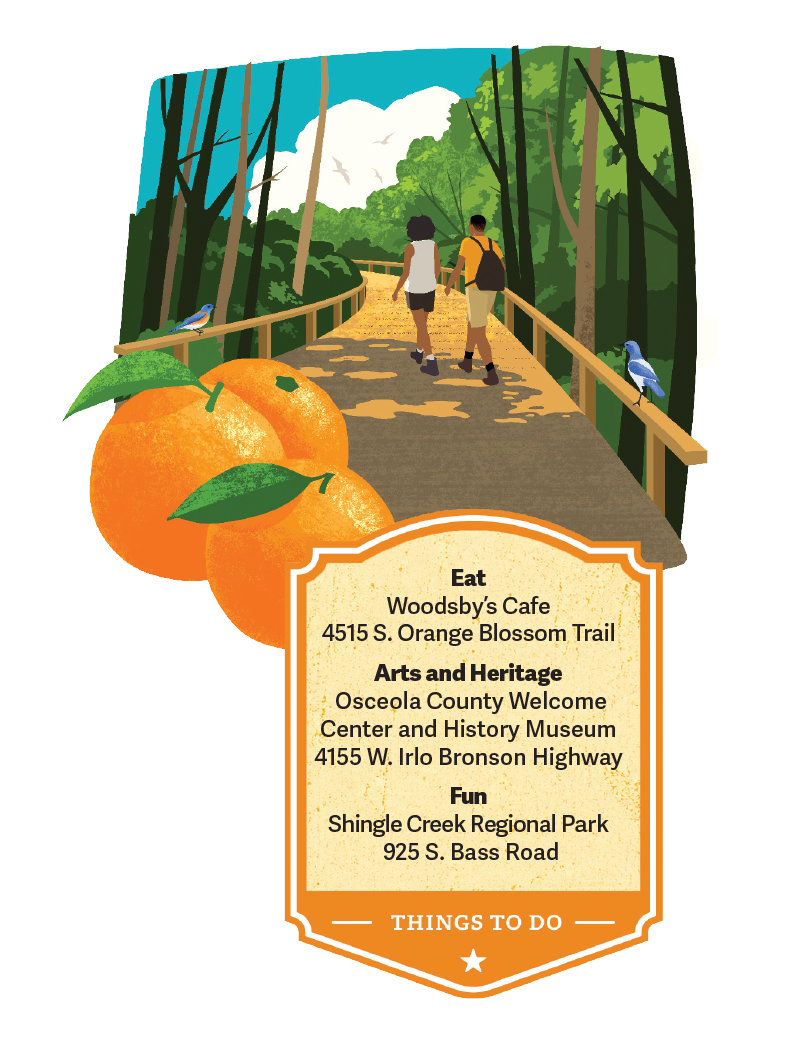
First, you’ll need food to fortify yourself for your adventure. Not too far from the bright tourist strip, Woodsby’s Cafe serves classic American food to the locals who keep coming back for more. Once you’re satiated and ready to see and do things most visitors never do, lace up your walking shoes. In the midst of the tourist oasis lies one of another sort: Shingle Creek Regional Park immerses you in the headwaters of the Florida Everglades. Hike, paddle, cycle or take a leisurely stroll here — the park spreads out into the Shingle Creek Regional Trail. After all that, stop in the Osceola County Welcome Center and History Museum, which offers insight into the natural and built history of one of Florida’s most underappreciated towns. Bonus: They usually have a gator hatchling or two in a tank. You cannot pet them, but they’re fascinating to watch.

 WINTER PARK: FROM ROUGH TO RAIL
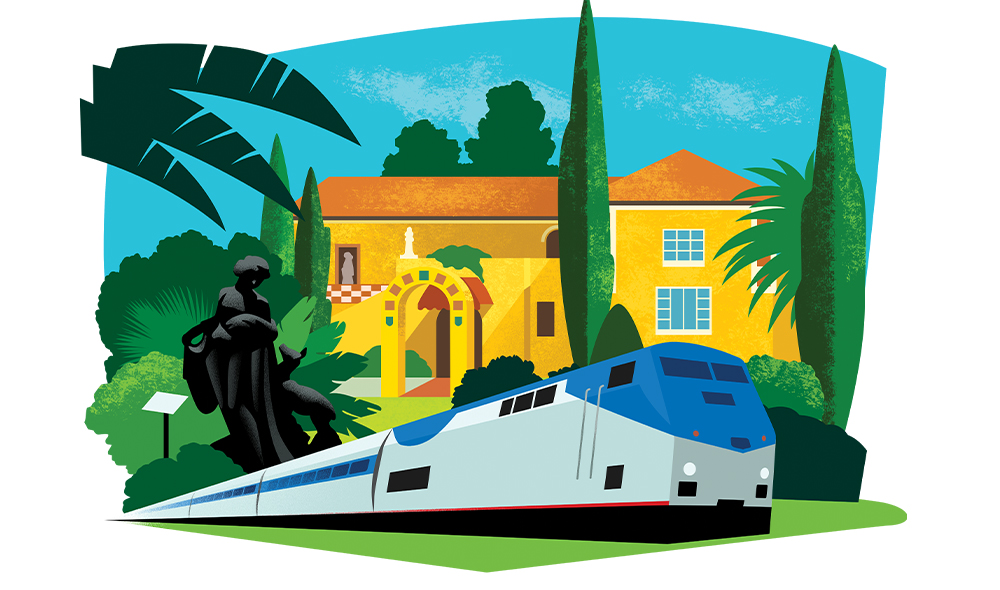
Today, Winter Park is a study in elegance, but in 1886, it was rougher country. Plant was determined to change that, and rail passengers celebrating the 1896 new year in Florida could have done so on opening day of The Seminole, Plant’s luxe hotel on the shores of Lake Osceola. If you want to re-create the train trip to Tampa from Winter Park, head to Union Station in Ybor and board the Silver Meteor, which follows the same line. Disembark at Winter Park and it’s but a few steps to the heart of town. Of course, you can drive there, too, but something about arriving by train feels more like Plant intended.
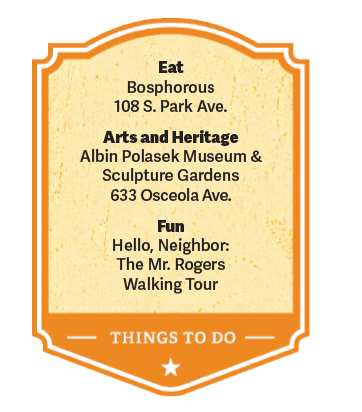
There’s no shortage of spectacular food in Winter Park, but the original Bosphorous on Park Avenue stands out as some of the city’s finest. Dine inside or al fresco on classic Turkish food. The soslu patlican (sauteed eggplant) and lamb köfte offer tasty insight into Turkish foodways you won’t soon forget — and may have you planning a return trip.
As for arts, well, as it does with its food scene, Winter Park over-delivers. The Morse Museum gets the lion’s share of attention, but Winter Park has some other gems, too. If you only have time for one, pay a visit to the Albin Polasek Museum & Sculpture Gardens, located on the space once occupied by Plant’s Seminole Hotel. Winter Park isn’t only visual art — Mr. Rogers called it his neighborhood while he studied music as an undergrad. Today you can follow in his footsteps with a self-guided audio tour. Better yet: Book a two-hour guided tour.

SANFORD: ALL ABOARD THE CELERY TRAIN
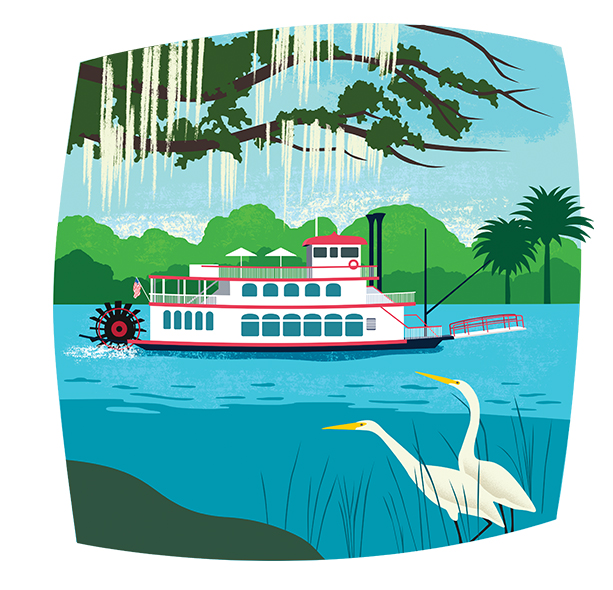
Before there was Orlando and the Mouse, there was Sanford and celery. And Sanford, not Tampa, was one of two significant hubs for Plant’s railroad (the other was in Waycross, Georgia). But let’s go back to celery. Yes, Sanford was the celery capital of the country. Running the railroad here was a deliberate choice, because Sanford’s Lake Monroe leads to the St. Johns River, a crucial commercial waterway both then and now.
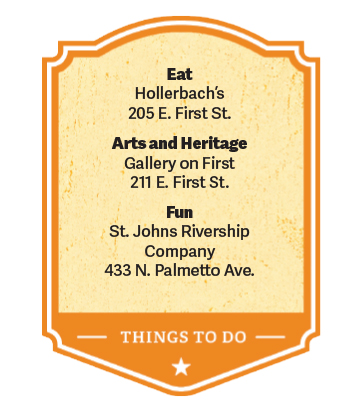
Today, the St. Johns Rivership Company carries different cargo — lunch and dinner guests — on a sternwheeler paddle-boat that travels part of the same river those first cargo ships did. They have lunch and dinner cruises, but save room. Back on the main thoroughfare, Hollerbach’s draws fans of German food from across the state, and their kalbsschnitzel (veal wiener schnitzel) is worth the drive.
Of course, you’ll want to walk off that food, so head to the Gallery on First to meet Sanford-area artists. This venue hosts established and emerging artists, offering both gallery space and studio space where anyone can learn more about their work or watch them create. And it’s just close enough to Walt Disney World that every now and then, you might meet a Disney artist creating decidedly non-Disney art.

BELLEAIR: TAKE IN THE SPLENDOR
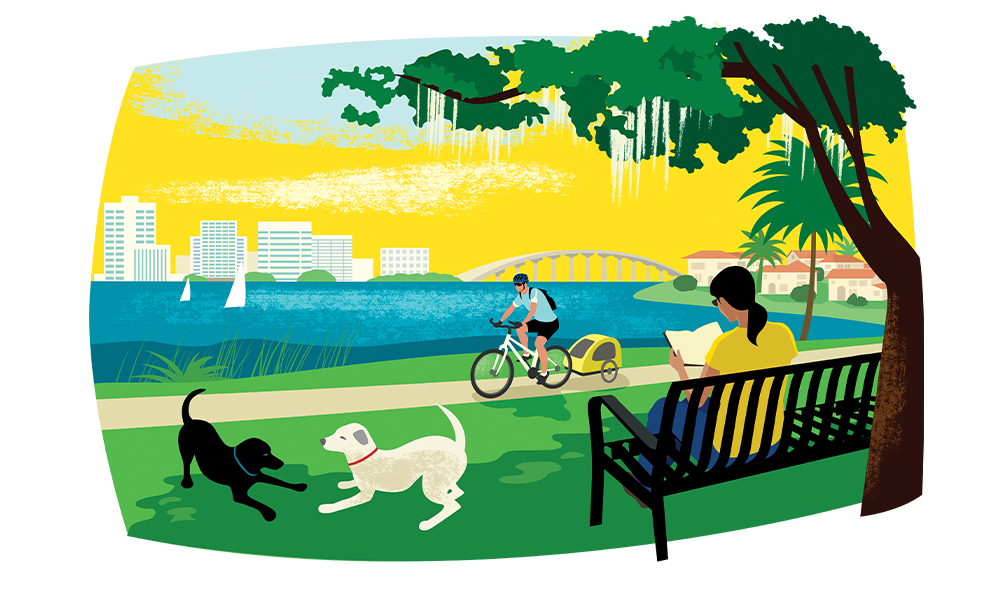
The Belleview Biltmore, a grand wooden structure with Tiffany glass and every luxury available during Plant’s time, suffered demolition by neglect for years, and today most of the original structure is gone. But in its prime, this lavish Belleair hotel had a private spur running off the main railroad, a moat and a riding stable. Plant’s son, Morton, favored this hotel, and a visit to what remains today shows you why: With stunning vistas of the saltwater and sunsets, it’s a natural place to slow down and appreciate the splendor of Florida.
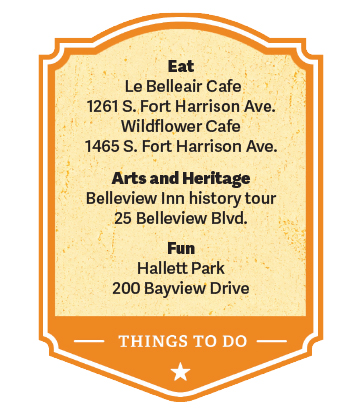
Today, the Belleview Inn surrounds a sliver of the remaining building, but anyone can go inside and take an audio tour. Locals favor Le Belleair Cafe, a French bakery (the crepe provençal, with tomatoes, eggplant, asiago, arugula and egg is a must-do). To work off all those calories, bike through the streets surrounding the Belleview Inn to take in the different architectural styles and historic homes. Plan ahead and order a sandwich from Wildflower Cafe (the grilled pastrami and Swiss is salty and cheesy and practically perfect in every way); after your bike ride, you can enjoy a picnic on the Intracoastal Waterway at the dog-friendly Hallett Park. It’s not exactly as Plant envisioned, but it’s definitely an afternoon to remember.

 OCALA: TAKE THE WATERS
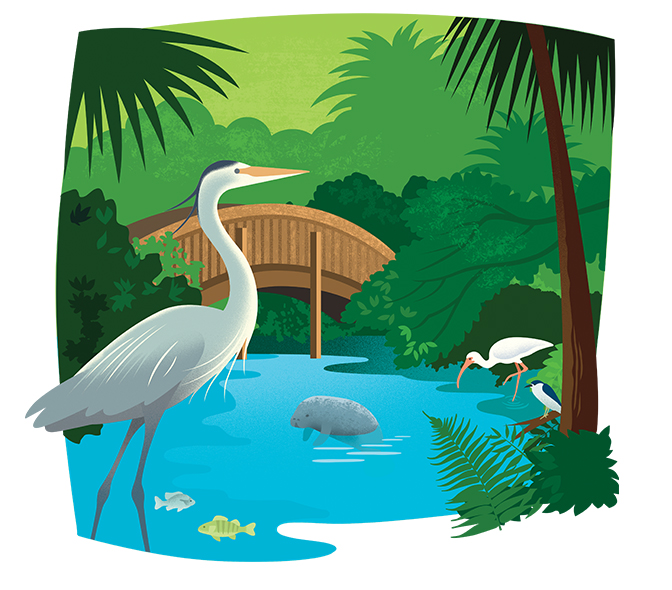
If Sanford’s waterways invited efficient commerce, Ocala’s entreat you to explore the springs. When Plant bought the Ocala House, a 200-room hotel, he capitalized on the area’s reputation as having “healing waters” and marketed the Ocala House as a health retreat. People once came here to “take the waters” (literally, get in the springs for health reasons), and while visitors today aren’t always so health-minded, there’s no question there’s something magical about a Florida spring.
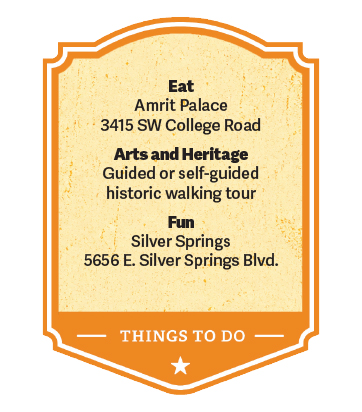
Today, the Ocala House is a Hilton at the corner of Broadway and First Avenue, but it’s part of the historic walking tour that brings you back in time to the Ocala that Plant knew. And, while Ocala’s nearby Silver Springs gets all the attention, there are other springs with smaller crowds and water that feels every bit as magical. Go ahead and rent a kayak at Silver Springs (or put in your own there for a nominal fee), but paddle instead the Silver River — it has plenty of springs secreted along its shores, and they won’t be nearly as busy as Silver Springs.
When it’s time to recharge with food, Amrit Palace looks like an unlikely choice — it’s right off the interstate in a congested area, and it doesn’t look like much from the outside, but inside this hidden-in-plain-sight gem, you’ll want to take your time and indulge your taste buds with the finest Indian food in Ocala. Pair their Indian red wine with the navratan korma, a vegetable-forward dish with flavors that explode on your tongue.
More UTampa News