5 Minutes With
Kevin Fridy
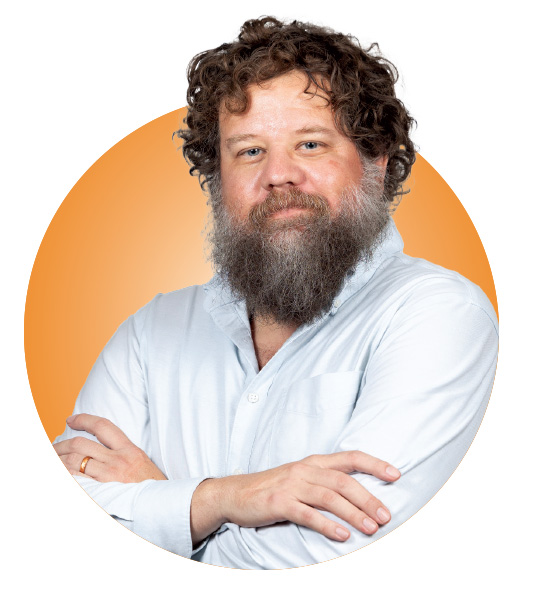 Kevin Fridy, chair and professor of political science and international studies, recently received UTampa’s most prestigious faculty award: the Louise Loy Hunter Award, which honors excellence in teaching and cumulative contributions in service and scholarship.
Tell me about your research.
I study West African politics. Most recently, a colleague from USF and I did field research in Mali, Ghana and Burkina Faso to look at how global power competition and violent extremism effect local governance.
How did you get involved with your field?
I’m from Palatka, a pretty small town in North Florida, and growing up, I didn’t really know what I wanted to do with my life, but I knew I wanted to get out. I received a full scholarship to go to George Washington University in D.C. and decided to study international affairs. I had never been out of the country, didn’t even have a passport, but my program had a requirement to study abroad. I was really attracted to University of Ghana — it seemed like an exciting place to go. I spent a semester there and fell in love with the nature in the area, and the people were very friendly. I started learning the language, Twi, and was able to continue my education with a foreign language studies fellowship at the University of Florida, which has the biggest African studies center in the country.
How often have you returned to West Africa since then?
I’ve taken students to Ghana almost every year since I started at UTampa in 2009. I’ve taken a total of about 160 students for their first time seeing West Africa. It’s always interesting to watch it through their eyes, because initially things seem quite exotic. The food tastes different, they hear different languages, they want to pet every dog — I tell them that’s a good way to catch rabies. But by the end, they see that it’s not that different.
What is your approach for guiding students through that experience?
I divide them up into small groups of two or three, so they can collaborate. Then I step back and let them go out into town to get food, socialize and find their way around without Uber. Of course, I’m there if a big problem comes up, but on Day One, if they come to me with little things, I’m just going to give their question right back to them. They learn how to advocate for themselves, and I watch them mature over those two weeks.
Are you the same way in the classroom?
I try to be. I really value the idea of them forming a community in their classes. I want them to leave the class knowing at least a handful of their peers. I’ve seen more and more that when students isolate themselves, they’re less happy and engaged. In each of my classes, I incorporate group work to get them into the mindset of thinking as a team. I also started banning laptops, which leads to a lot more interaction with the lesson and with each other. I try to communicate that I’m not looking for perfection, I’m looking for effort. When they’re genuinely interested in learning, rather than scoring on a rubric, they’ll end up doing better in the course.
What are some of your other interests or hobbies?
I share two hobbies with my daughter; one of them is bird watching, and the other is NASCAR watching. One of the things we’re yelling a lot, and one of the things we’re very quiet. Just yesterday, we were both yelling at the TV; neither of our drivers won, but it was an exciting race. We both root for Toyotas, but different ones. Then, behind my house we have a retention pond, where we can see up to 50 or 60 different species of birds on some days. We don’t even care about seeing rare birds — we just want to watch the interesting ones. You just have to open your eyes.
— Madeline McMahon M.A. ’24